Simulation for developing novel volumetric 3D printing
Paper: A Physics-based Machine Learning Algorithm for Accurate Vat Photopolymerization
Patent: Triggered Luminescence and Machine Learning for Optimized Resin Printing
Overview
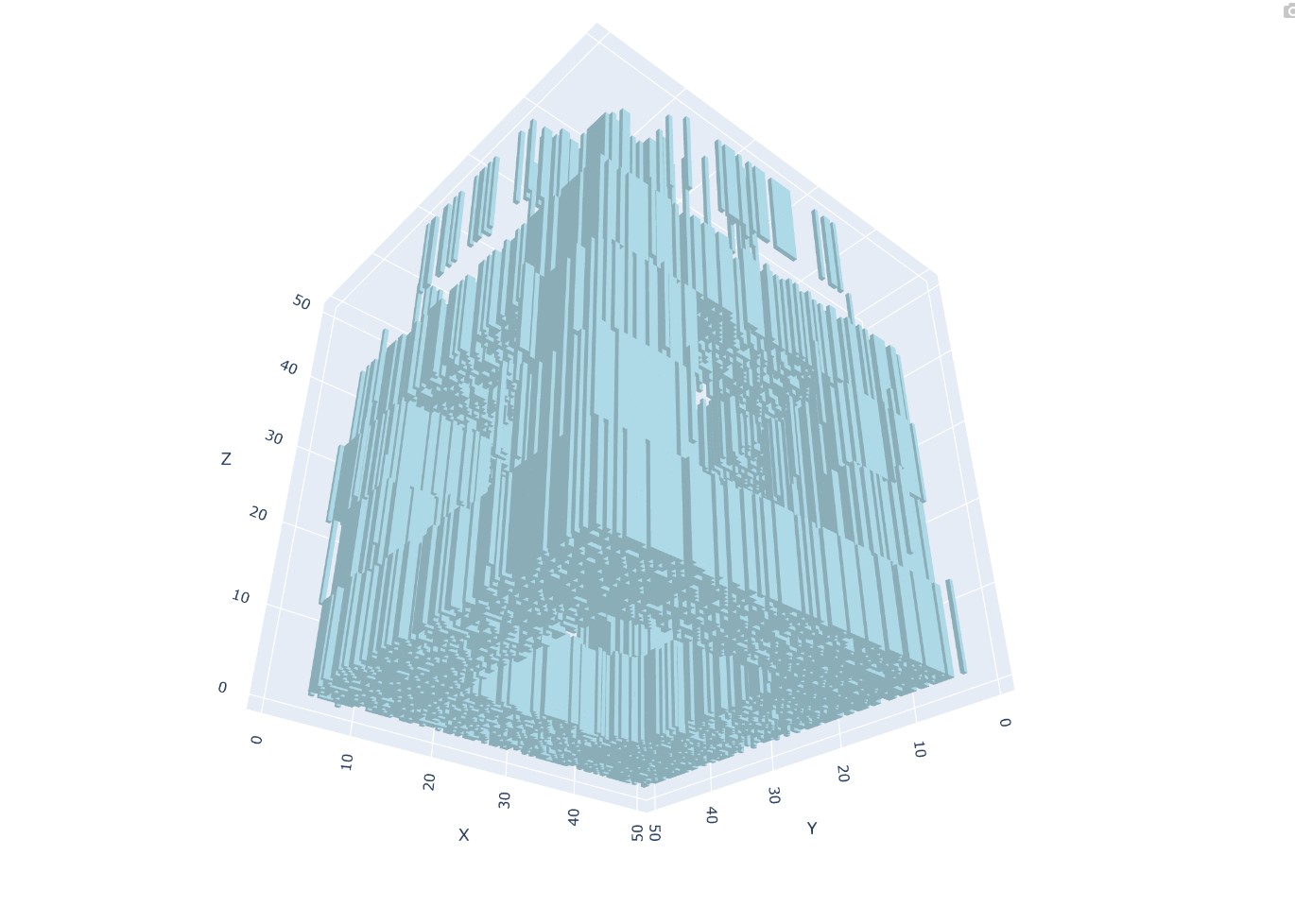
This project explores the cutting edge of additive manufacturing through volumetric 3D printing. Unlike traditional layer-by-layer approaches, volumetric printing uses a hologram to cure an entire 3D object simultaneously within a vat of photopolymer resin.
Problem Statement
Traditional 3D printing methods are limited by their sequential, layer-by-layer approach, which is time-consuming and can introduce structural weaknesses at layer boundaries. Volumetric printing promises to overcome these limitations, but presents significant computational challenges.
- Calculating optimal holographic patterns for arbitrary 3D geometries
- Optimizing light intensity distribution throughout a 4000 by 4000 by 20 tensor
- Handling highly non-linear photochemical reactions
Technical Approach
Gradient Descent Optimization
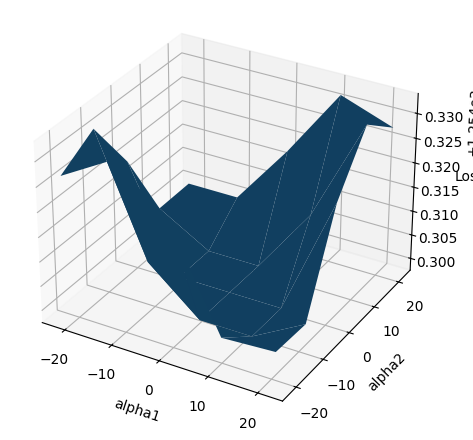
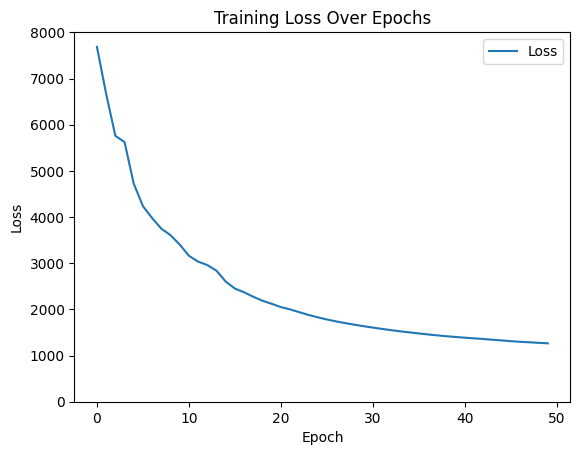
The core challenge is determining the holographic pattern that will produce a light intensity distribution that will produce the correct geometry. This is a highly intractable, non convex, inverse problem. I implemented a gradient descent algorithm that:
- Models the forward propagation of light through the hologram
- Simulates the conversion of intensity to cured geometry
- Computes the error between desired and achieved geometries
- Iteratively adjusts the holographic pattern to minimize this error
Oxygen Diffusion Modeling
Dissolved oxygen acts as a polymerization inhibitor. We implemented a diffusion model to predict and control oxygen distribution during the printing process, enabling more precise control over the curing reaction.
Key Innovation
Our approach combines physical modeling of light propagation with machine learning optimization techniques, allowing for well formed solutions to an optimization problem.
Implementation Details
The system was implemented in Python. I ran on Frontera, a linux supercomputer from Texas Advanced Computing Center, using CUDA and parallel processing on GPUs. I also had to be mindful of memory and computational complexity.
Software Stack
- Python: Primary development language for optimization algorithms
- NumPy/Pytorch: Numerical computations and optimization
- MATLAB: Data Analysis
Results & Achievements
My code has yielded several significant improvements:
Orders of magnitude faster
Convergence speed compared to earlier models
95% Accuracy
Match between target and achieved geometry
0.5um Resolution
Improved feature resolution in printed objects
My work on this project resulted in a patent and a conference paper, for which I am the second author. I established the code base that is going to be used for the rest of this project, transitioned the team to using Git, and presented my findings at weekly meetings across 3 labs and 2 states.
Future Directions
Ongoing work focuses on several key areas:
- Extending to multiple materials
- Scaling to larger print volumes and smaller pixel sizes